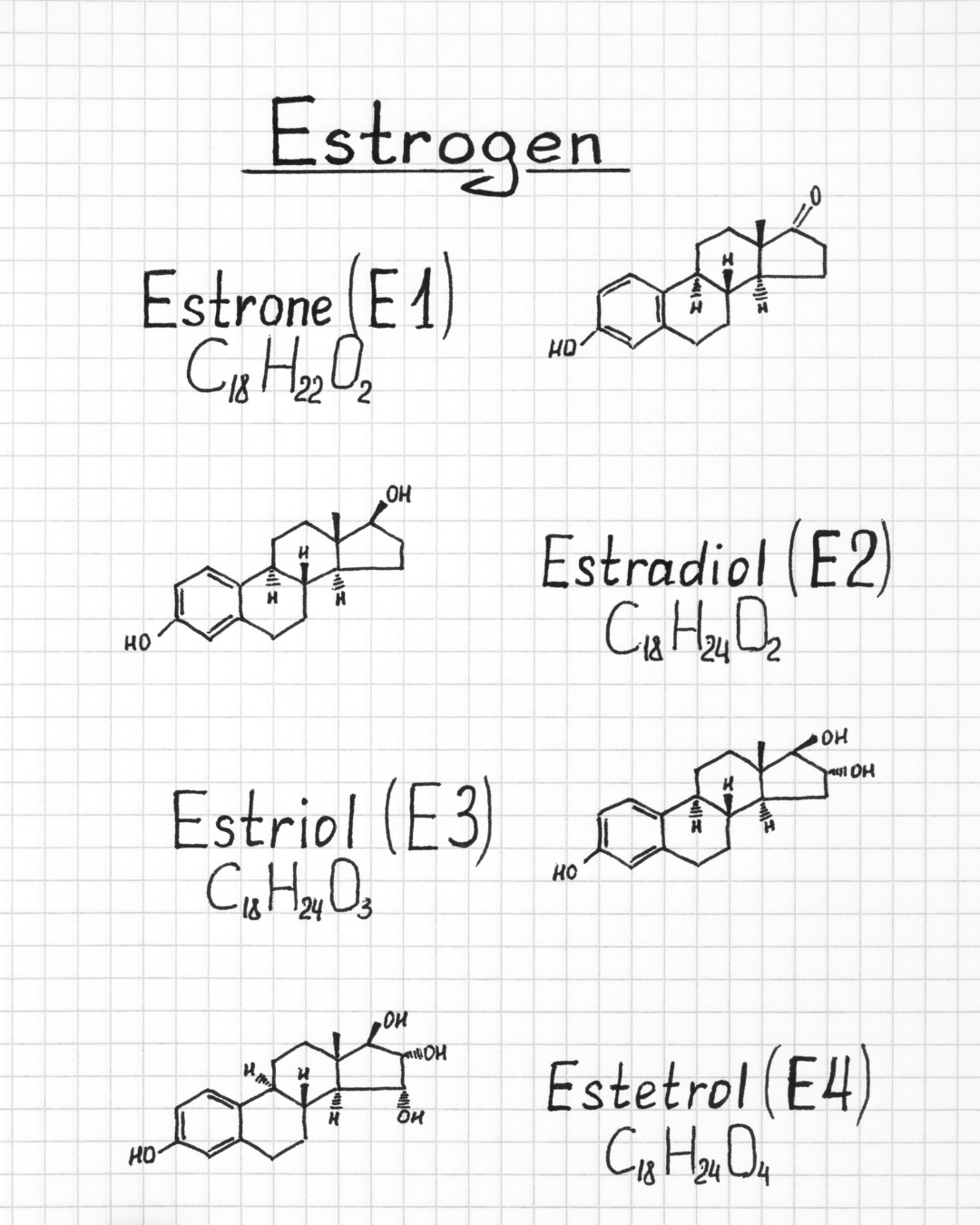

When estrogen levels are high relative to progesterone — what is commonly called "Estrogen Dominance" — it significantly impacts body fat gain and loss, lowers testosterone and growth hormone, suppresses thyroid function, and raises insulin and cortisol. The result: excess body fat that seems impossible to lose regardless of diet or exercise.
The Hormonal Interplay
Estrogen helps develop and maintain the reproductive system, contributes to cognitive health, bone health, and cardiovascular function. However, it can also promote fat storage and raise insulin and cortisol — particularly in the form of estrone. Excess estrogen blocks thyroid receptor sites and causes the liver to produce elevated thyroid binding globulin, gobbling up available thyroid hormone.
Progesterone is a precursor to testosterone and is critical for muscle building. It promotes fat loss, calms the nervous system, lowers insulin and cortisol levels, and is the main hormone that keeps estrogen in balance. When progesterone is low, testosterone production falls and estrogen rises unchecked.
Testosterone is a major factor in both muscle bulk and strength as well as fat-burning. It helps regulate sex drive, bone mass, fat distribution, and the production of red blood cells. More lean muscle mass leads to higher resting metabolic rates.
Thyroid regulates your metabolism — all processes in the body dealing with energy production and use. It works to increase energy production in each cell and the rate at which energy (carbohydrates and stored fat) is burned.
The Vicious Cycle of Estrogen Dominance
High sugar raises insulin. High insulin raises cortisol. Cortisol is created from progesterone — so the body takes a fat-burning hormone and converts it into a fat-building one. Low progesterone leads to lower testosterone and higher estrogen. Higher estrogen causes more sugar cravings. The cycle repeats.
Excess estrogen also causes the liver to produce thyroid binding globulin, reducing available thyroid hormone. Less thyroid means less estrogen is broken down by the liver, causing further buildup. Less thyroid means less energy, more fatigue, and more fat storage.
So: more estrogen → less progesterone, thyroid, and testosterone → more insulin, body fat, and cortisol → even less progesterone and testosterone → even more estrogen.
What To Do About It
Protein first. The amino acids in proteins are key to building progesterone, testosterone, and thyroid hormones. Adequate protein also lowers cravings for the sugars that drive this hormonal cascade.
Reduce processed sugars and refined carbohydrates. These directly drive insulin and the estrogen dominance spiral.
Magnesium is calming, helps lower cortisol before sleep, and most people are deficient. Fiber helps remove excess estrogen from the body and stabilizes blood sugar. Vitamin B6 helps reduce estrogen levels in the blood. Iodine and tyrosine support thyroid hormone production.
Most importantly: Test, don't guess. Each of these hormones — estrogen, progesterone, testosterone, thyroid, insulin, and cortisol — can be tested. A comprehensive panel gives you the full picture and makes targeted treatment possible.
Key Tests to Request
- Estradiol, Estrone, and Estriol (E1, E2, E3)
- Progesterone
- Free and Total Testosterone with SHBG
- Free T3, Free T4, TSH, and TPO(ab)
- Fasting Insulin and Glucose / HbA1c
- Cortisol (morning and evening)
- DHEA-S and IGF-1